

The Silent Thief: How Poor Compressed Air Piping Layout Increases Energy Costs
Compressed air is one of the most useful utilities in an industrial facility, but it can also be one of the most expensive to produce. While businesses often focus on compressor efficiency, the piping system that delivers compressed air throughout the facility can have a major impact on overall system performance.
Poorly designed piping, undersized lines, excessive fittings, and air leaks can all contribute to pressure loss and wasted energy. When pressure drops between the compressor and the point of use, operators may increase compressor pressure to compensate, causing the compressor to consume more energy than necessary.

The Anatomy of an Inefficient Piping System
Compressed air loses pressure as it travels through a piping system. Every section of pipe, fitting, valve, elbow, and connection adds some resistance to airflow. When these losses become excessive, the result can be higher operating costs and inadequate pressure at the point of use.
1. Poor Header Layout
A simple straight-line header can create uneven pressure throughout a facility, particularly when multiple machines and tools are operating simultaneously. Equipment located near the end of a long run may experience greater pressure fluctuations and pressure drop.
The Result: Operators may increase compressor discharge pressure to compensate for inadequate pressure at the far end of the system. This can increase energy consumption and place additional demands on the compressor.
2. Excessive Elbows, Tees, and Fittings
Every change in direction and connection introduces additional resistance to airflow. A piping system with excessive elbows, tees, valves, and other restrictions can create unnecessary pressure drop.
The Solution: Keep piping runs as direct as practical and use appropriately sized components. Smooth transitions and efficient layouts can help reduce unnecessary restrictions throughout the system.
3. Undersized Piping
Piping that is too small for the required airflow can significantly increase pressure drop. As demand increases, air velocity through an undersized pipe increases, which can increase friction losses and make it more difficult to deliver the required pressure to downstream equipment.
The Solution: Properly sizing the piping system for the required airflow, distance, and operating pressure can help minimize pressure drop and provide more consistent performance.
How to Improve Compressed Air Piping Efficiency
A well-designed compressed air piping system should provide adequate airflow and stable pressure while minimizing unnecessary restrictions. Several design practices can help accomplish this.
Use a Loop or Ring Main
A loop or ring main creates multiple paths for compressed air to reach points of use. Instead of forcing all of the air through a single direction from one end of the facility to the other, a loop can help distribute airflow more evenly throughout the system.
This type of layout can be particularly useful in larger facilities with multiple workstations and varying air demand.
Use Proper Pipe Sizing
Pipe diameter should be selected based on factors such as required airflow, operating pressure, pipe length, and expected future demand. Installing larger piping where appropriate can reduce pressure drop and provide additional capacity for future expansion.
Manage Condensation
Compressed air contains moisture, which can condense as the air cools. Proper piping design can help control where that moisture collects and make it easier to remove before it reaches pneumatic equipment.
Main horizontal piping is commonly installed with a slight slope toward appropriate drainage points. Drop legs should also be designed so that condensate can be collected and drained rather than carried directly into downstream equipment.
Take Drops From the Top of the Main Header
For many traditional compressed air piping systems, connecting drops to the top of the main header helps reduce the amount of condensate entering the branch line. A vertical rise from the header can then feed the point of use while moisture remains in the lower portion of the main piping system.
Don’t Forget About Air Leaks
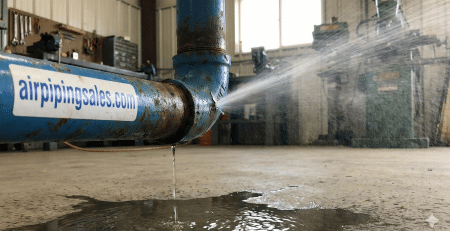
Piping design is only one part of compressed air efficiency. Leaks at fittings, hoses, valves, quick couplers, and other connections can waste significant amounts of compressed air.
Even a relatively small leak can waste compressed air continuously, 24 hours a day. Regular leak inspections and proper maintenance can therefore be an important part of controlling operating costs.

The Bottom Line
A compressed air system is more than just the compressor. The piping network plays an important role in delivering the required airflow and pressure to every machine, tool, and workstation in your facility.
Proper pipe sizing, an efficient header layout, appropriate fittings, effective condensate management, and regular leak detection can all help reduce pressure drop and unnecessary energy consumption.
Whether you’re building a new compressed air system, expanding an existing facility, or trying to improve the performance of an aging installation, a properly designed piping system can make a significant difference.
Need Help With Your Compressed Air Piping?
Air Piping Sales can help you find the piping, fittings, drops, and related components needed for your compressed air system. If you’re planning a new installation or looking to improve an existing layout, reach out to our team to discuss your project and learn more about your options.
Contact Air Piping Sales today to get started on a more efficient compressed air piping system.
Want to learn more about the complete air system? Visit Compressor Now equipment sales. Or need help with tool selection visit Pneumatic Now tool sales.

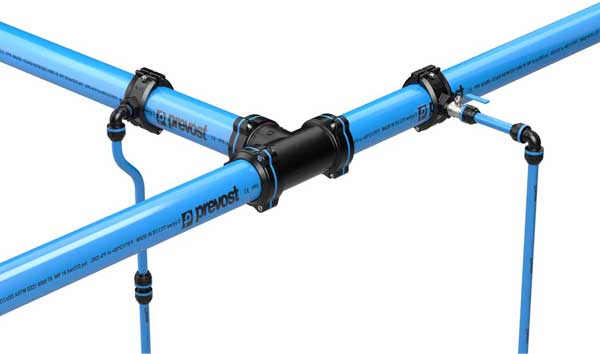


Guide to Compressed Air Fittings: Push vs. Threaded
Push-to-connect fittings offer fast, modular setup for drops, while durable threaded fittings best suit high-pressure main lines.

Cost of Downtime: Why Cheap Piping is More Expensive
Cheap air piping causes costly energy leaks, friction pressure drops, and catastrophic failure risks; quality materials yield long-term ROI.
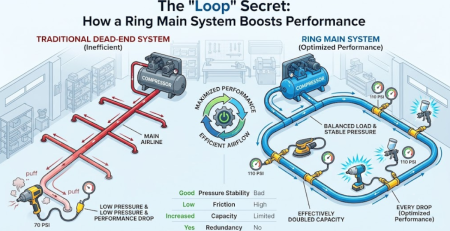
How a Ring Main System Boosts Performance
Discover the power of a Ring Main system. Learn how looping your compressed air lines stabilizes pressure, cuts friction, and...
Prevent Frozen Compressed Air Lines in Winter
Don't let freezing temperatures ruin your tools. Learn how to winter-proof your compressed air lines and prevent ice plugs from...
Aluminum: Why Facilities are Trading Steel
Modern facilities are replacing steel with aluminum piping for better efficiency, cleaner air, lower maintenance, and long-term cost savings.
Meeting ESG Goals with Efficient Air Piping
Zero-Leak Sustainability: Learn how efficient air piping can reduce energy waste, lower emissions, and help industrial facilities meet ESG goals.
Is Stainless Steel Worth the Premium?
Is stainless steel piping worth the premium? Explore how corrosion resistance, energy savings, and longevity can deliver long-term ROI.
Undersized Compressed Air System: 5 Signs
5 Signs Your Compressed Air System is Undersized (And How to Fix It)In the world of manufacturing, a compressed...
Aluminum Piping vs. Black Iron: Best Compressed Air?
Aluminum vs. Black Iron: Why Your Piping Material Choice is Killing Your ToolsWhen setting up a compressed air system, most...
Addressing Costly Air Leaks
How Much Are Your Air Leaks Actually Costing You?Often times the "hiss" of a compressed air leak blends into the...