

A Buyer’s Guide to Compressed Air Fittings: Push-to-Connect vs. Threaded
Choosing the right fittings is an important part of designing a reliable compressed air piping system. The right connection can help reduce leaks, simplify installation, and make future changes to your system easier.
Two of the most common options are push-to-connect fittings and threaded fittings. Each has advantages depending on the application, piping material, pressure requirements, and how permanent the installation needs to be.

Push-to-Connect Fittings: Fast and Flexible
Push-to-connect (PTC) fittings, also known as one-touch fittings, use an internal gripping mechanism and seal to hold tubing securely in place. Installation is straightforward: cut the tubing cleanly and push it into the fitting until it is fully seated.
Advantages of Push-to-Connect Fittings
- Fast Installation: Push-to-connect fittings can significantly simplify installation by reducing the need for wrenches, thread sealant, and other installation steps.
- Easy to Modify: Drops and connections can be disconnected and repositioned when your workstation or equipment layout changes.
- Compact Installation: Because they do not require wrench clearance around the connection, PTC fittings are useful in tight spaces and compact installations.
- Ideal for Point-of-Use Connections: They are commonly used with flexible pneumatic tubing for equipment, machinery, and individual workstations.
Considerations for Push-to-Connect Fittings
- Tubing Compatibility: PTC fittings are generally designed for compatible pneumatic tubing such as nylon, polyurethane, or polyethylene. Always verify the fitting and tubing manufacturer’s specifications.
- Pressure and Temperature: Maximum pressure and temperature ratings vary by fitting, tubing material, and manufacturer. Make sure the complete connection is rated for your application.
- Tube Preparation: A clean, square tube cut is important for creating a reliable connection and minimizing the potential for leaks.
Threaded Fittings: Proven and Heavy-Duty
Threaded fittings remain a standard choice for compressed air systems, particularly where rigid piping, higher pressures, or permanent connections are involved. Common thread types include NPT and BSP, depending on the equipment and region.
Advantages of Threaded Fittings
- Durable Construction: Threaded fittings are available in materials such as brass, steel, stainless steel, and other materials suited for demanding applications.
- Wide Compatibility: Compressors, filters, regulators, valves, and other compressed air equipment commonly use threaded ports.
- Suitable for Main Piping: Threaded connections can be a practical choice for rigid piping systems and permanent installations.
- Many Options Available: Elbows, tees, reducers, adapters, couplings, and other configurations make threaded systems highly adaptable.
Considerations for Threaded Fittings
- More Installation Work: Threaded connections generally require appropriate tools and thread-sealing practices.
- Proper Sealing Is Important: Incorrectly installed or sealed threads can become a source of compressed air leaks.
- More Difficult to Modify: Changing the location of a threaded connection typically requires more time and disassembly than a push-to-connect connection.
Push-to-Connect vs. Threaded Fittings: At a Glance
| Feature | Push-to-Connect | Threaded |
|---|---|---|
| Installation | Quick and simple | Requires tools and proper sealing |
| Typical Tubing/Piping | Flexible pneumatic tubing | Rigid pipe and threaded components |
| Modification | Easy to disconnect and relocate | More involved |
| Space Requirements | Good for compact installations | Requires room for installation tools |
| Common Applications | Equipment drops, machinery, workstations | Main piping, headers, permanent connections |
Which Compressed Air Fitting Should You Choose?
The right fitting depends on the design of your compressed air system and the requirements of the application.
Push-to-connect fittings are a great option when you’re working with compatible flexible tubing, need quick installation, or expect to modify your workstation layout in the future. They are particularly useful for point-of-use connections and equipment drops.
Threaded fittings can be a better fit for rigid piping, main headers, permanent installations, and applications where the connection must withstand demanding operating conditions. As with any compressed air component, verify the pressure, temperature, material, and thread specifications before installation.
Consider a Hybrid Compressed Air Piping System
You don’t necessarily have to choose one fitting style for your entire system. Many compressed air installations use a combination of threaded and push-to-connect connections.
For example, a facility may use rigid piping and threaded connections for the main compressed air header, then use flexible tubing and push-to-connect fittings for drops and point-of-use connections. This approach can provide a durable main distribution system while making equipment connections easier to install and modify.
Need Help Choosing Compressed Air Fittings?
The right fittings are an important part of building a reliable and efficient compressed air system. Whether you are installing a new air piping system, adding drops, replacing fittings, or modifying an existing layout, choosing components that match your piping and operating requirements is essential.
Have questions about compressed air fittings or piping? Reach out to Air Piping Sales for more information about fittings, connections, and compressed air piping solutions. Our team can help you identify the components you need for your application.
Contact Air Piping Sales today to get started.
Want to learn more about the complete air system? Visit Compressor Now equipment sales. Or need help with tool selection visit Pneumatic Now tool sales.


“Silent Thief”: How Poor Layout Leaks Your Energy
Inefficient compressed air piping causes pressure drops and leaks that waste up to 30% energy; smart loop layouts eliminate these...

Cost of Downtime: Why Cheap Piping is More Expensive
Cheap air piping causes costly energy leaks, friction pressure drops, and catastrophic failure risks; quality materials yield long-term ROI.
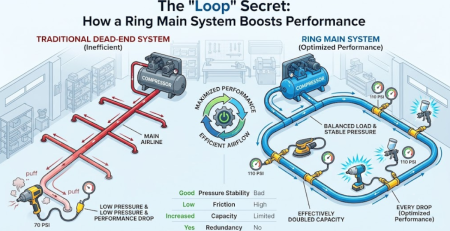
How a Ring Main System Boosts Performance
Discover the power of a Ring Main system. Learn how looping your compressed air lines stabilizes pressure, cuts friction, and...
Prevent Frozen Compressed Air Lines in Winter
Don't let freezing temperatures ruin your tools. Learn how to winter-proof your compressed air lines and prevent ice plugs from...
Aluminum: Why Facilities are Trading Steel
Modern facilities are replacing steel with aluminum piping for better efficiency, cleaner air, lower maintenance, and long-term cost savings.
Meeting ESG Goals with Efficient Air Piping
Zero-Leak Sustainability: Learn how efficient air piping can reduce energy waste, lower emissions, and help industrial facilities meet ESG goals.
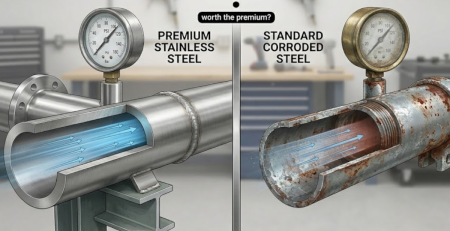
Is Stainless Steel Worth the Premium?
Is stainless steel piping worth the premium? Explore how corrosion resistance, energy savings, and longevity can deliver long-term ROI.
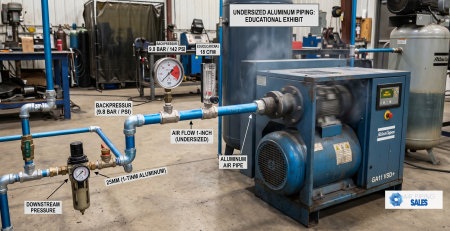
Undersized Compressed Air System: 5 Signs
5 Signs Your Compressed Air System is Undersized (And How to Fix It)In the world of manufacturing, a compressed...
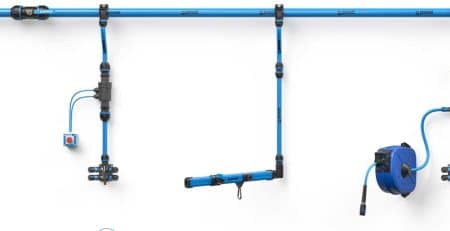
Aluminum Piping vs. Black Iron: Best Compressed Air?
Aluminum vs. Black Iron: Why Your Piping Material Choice is Killing Your ToolsWhen setting up a compressed air system, most...
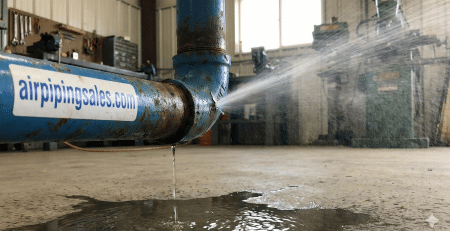
Addressing Costly Air Leaks
How Much Are Your Air Leaks Actually Costing You?Often times the "hiss" of a compressed air leak blends into the...