The Steel Dilemma: Is Stainless Steel Worth the Premium for Your Compressed Air System?
When designing a compressed air system, the compressor often gets most of the attention. Facilities spend time comparing horsepower, airflow, pressure ratings, and efficiency numbers, but the piping network that delivers the air is just as important.
Your compressed air piping system is the circulatory system of your facility. It connects your compressor to every tool, machine, and production process that depends on clean and reliable air. A poorly designed or outdated piping system can create pressure loss, contamination, leaks, and unnecessary energy costs.
One of the biggest decisions facility managers face is choosing the right piping material. Traditional galvanized steel and black iron have been common choices for decades, while aluminum has become popular for modern modular systems. However, for certain applications, stainless steel remains the premium option.
The question is simple: Is stainless steel compressed air piping worth the additional investment?
For many facilities, the answer comes down to long-term performance, air quality requirements, and total cost of ownership.
Understanding Stainless Steel Compressed Air Piping
Stainless steel compressed air piping is designed for applications where durability, cleanliness, and corrosion resistance are critical. Unlike standard carbon steel, stainless steel contains elements that protect the material from rust and degradation.
The most common grades used in industrial applications are:
- 304 Stainless Steel: A versatile option that provides excellent corrosion resistance for many compressed air applications.
- 316 Stainless Steel: A higher-performance grade with improved resistance to chemicals and harsh environments.
Choosing the correct piping material depends on your industry, air quality requirements, environment, and long-term operating goals.
1. The Enemy of Efficiency: Corrosion
Compressed air systems naturally create moisture. Atmospheric air contains water vapor, and when that air is compressed, moisture becomes concentrated inside the system.
Without proper drying and filtration, moisture can collect in piping. In traditional steel systems, this can lead to internal corrosion, rust buildup, and scaling.
Over time, corrosion creates several problems:
- Restricted Airflow: Rust and scale create rough internal surfaces that increase friction and pressure loss.
- Contamination: Rust particles can travel downstream and damage valves, tools, and sensitive equipment.
- Increased Maintenance: Filters clog faster, pneumatic components wear sooner, and repairs become more frequent.
Stainless steel provides a major advantage because it resists corrosion. The inside of the pipe remains cleaner, smoother, and more consistent over the life of the system.
The Stainless Advantage
Stainless steel piping helps facilities maintain better compressed air quality by preventing many of the problems associated with rust and degradation.
This is especially important in industries where compressed air quality directly impacts the final product, including:
- Food and beverage manufacturing
- Pharmaceutical production
- Electronics manufacturing
- Paint and finishing applications
- Cleanroom environments
In these environments, clean air is not just about efficiency. It is about protecting products, meeting quality standards, and preventing contamination.
2. Energy Savings: The Smoothness Factor
Compressed air efficiency is heavily influenced by pressure drop. Pressure drop occurs when air loses energy as it travels through piping due to friction, restrictions, and poor system design.
A pipe that becomes rough internally creates more resistance. The compressor must work harder to maintain pressure at the point of use, which increases electrical consumption.
Because stainless steel resists corrosion, its internal surface stays smooth for much longer than traditional steel piping.
A smoother pipe interior helps provide:
- Lower friction loss
- More consistent airflow
- Reduced pressure drop
- Improved compressor efficiency
Even small improvements in pressure management can create significant savings over years of operation.
Many facilities spend extra energy creating additional pressure just to overcome distribution losses. Investing in better piping can reduce the need for that extra compressor output.
3. Installation: Modern Press-Fit Stainless Systems
Historically, stainless steel piping had one major disadvantage: installation complexity.
Traditional stainless systems often required welding, specialized labor, and extended installation time. This increased project costs and created challenges for facilities looking to upgrade quickly.
Modern press-fit stainless steel systems have changed the installation process.
- Faster Installation: Press-fit connections can significantly reduce installation time compared to welding or threading.
- Lower Labor Requirements: Installation requires less specialized equipment and fewer steps.
- No Hot Work: Press-fit installation avoids open flames and welding procedures in many applications.
- Reliable Sealing: Quality fittings provide strong, durable connections designed to prevent leaks.
Faster installation means less downtime and a quicker return on your compressed air upgrade investment.
4. When Is Stainless Steel Actually Required?
While stainless steel is an excellent choice for many facilities, some industries require it because of strict cleanliness or corrosion-resistance needs.
- Food and Beverage: Stainless piping helps maintain sanitary conditions and reduce contamination risks.
- Pharmaceutical Manufacturing: Clean air requirements often make stainless steel the preferred choice.
- Electronics Manufacturing: Sensitive production environments require highly controlled air quality.
- Chemical Processing: Stainless steel provides additional resistance in harsh environments.
For these industries, the higher upfront cost is often justified because system reliability and cleanliness are critical.
Stainless Steel vs. Other Compressed Air Piping Materials
| Feature | Galvanized/Carbon Steel | Stainless Steel |
| Initial Cost | Lower upfront cost | Higher upfront investment |
| Corrosion Resistance | Can rust and develop scale | Excellent corrosion resistance |
| Air Quality | Potential rust and contamination | Clean, consistent airflow |
| Longevity | Requires more maintenance over time | Designed for long service life |
| Energy Efficiency | Can decrease as buildup occurs | Maintains performance |
| Application | General-purpose systems | High-performance and critical applications |
The Total Cost of Ownership Calculation
The biggest mistake facilities make when comparing piping materials is looking only at the initial purchase price.
A compressed air system operates every day, often for years or decades. The real cost includes:
- Energy consumption
- Maintenance requirements
- Downtime
- Replacement components
- Future upgrades
A lower-cost material may become more expensive over time if it creates leaks, contamination, or efficiency problems.
Stainless steel often provides value by reducing long-term operating expenses and extending system life.
Building a Complete Efficient Compressed Air System
The piping material is only one part of an efficient compressed air system. Maximum performance requires the entire system to work together.
A complete compressed air solution may include:
- Compressors: Properly sized equipment to meet airflow demands.
- Dryers: Moisture removal to protect piping and equipment.
- Filters: Removal of contaminants and particles.
- Storage Tanks: Improved pressure stability and compressor efficiency.
- Piping: Reliable distribution from the compressor to every point of use.
- Drains: Automatic moisture removal to prevent buildup.
A well-designed system reduces waste and provides dependable air where it is needed.
Summary: Is Stainless Steel Worth It?
For facilities that require clean, reliable, and long-lasting compressed air distribution, stainless steel can be an excellent investment.
The upfront cost is higher than traditional piping materials, but the benefits include corrosion resistance, cleaner airflow, reduced maintenance, and improved long-term efficiency.
If your facility plans to operate for many years, requires strict air quality standards, or wants to minimize future piping problems, stainless steel may provide the best return on investment.
Need Help Selecting the Right Air Piping Solution?
Air Piping Sales can help you evaluate your compressed air requirements and select the right piping system for your facility. Whether you need stainless steel, aluminum, compressors, dryers, filters, drains, or other compressed air components, our team can help you find the right solution.
Contact Air Piping Sales today for more information, product recommendations, or assistance designing a reliable compressed air system built for long-term performance.
Want to learn more about the complete air system? Visit Compressor Now equipment sales. Or need help with tool selection visit Pneumatic Now tool sales.
Compressed Air Piping, Fluid Distribution
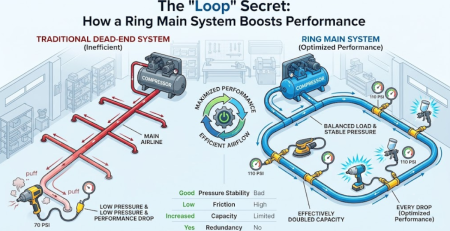
How a Ring Main System Boosts Performance
Discover the power of a Ring Main system. Learn how looping your compressed air lines stabilizes pressure, cuts friction, and...
Fluid Distribution, Compressed Air Piping
Prevent Frozen Compressed Air Lines in Winter
Don't let freezing temperatures ruin your tools. Learn how to winter-proof your compressed air lines and prevent ice plugs from...
Compressed Air Piping
Aluminum: Why Facilities are Trading Steel
Modern facilities are replacing steel with aluminum piping for better efficiency, cleaner air, lower maintenance, and long-term cost savings.
Compressed Air Piping
Meeting ESG Goals with Efficient Air Piping
Zero-Leak Sustainability: Learn how efficient air piping can reduce energy waste, lower emissions, and help industrial facilities meet ESG goals.
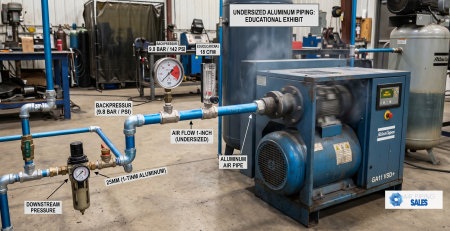
Compressed Air Piping
Undersized Compressed Air System: 5 Signs
5 Signs Your Compressed Air System is Undersized (And How to Fix It)In the world of manufacturing, a compressed...
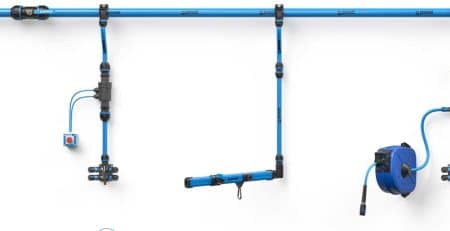
Compressed Air Piping
Aluminum Piping vs. Black Iron: Best Compressed Air?
Aluminum vs. Black Iron: Why Your Piping Material Choice is Killing Your ToolsWhen setting up a compressed air system, most...
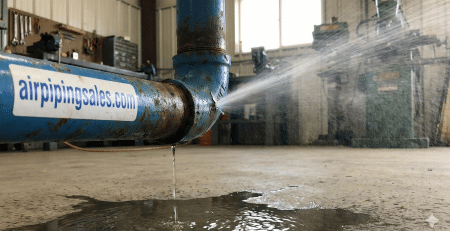
Compressed Air Piping, Fluid Distribution, Prevost How To
Addressing Costly Air Leaks
How Much Are Your Air Leaks Actually Costing You?Often times the "hiss" of a compressed air leak blends into the...
Prevost How To, Compressed Air Piping
Care Guide for Prevost Piping Systems
Care Guide for Prevost Piping SystemsWhen you choose a Prevost Piping System, you aren't just buying pipe—you are investing in...
Prevost How To, Compressed Air Piping
5 Steps to the Perfect Prevost Piping System (PPS) Layout
5 Steps to the Perfect Piping Layout Using Prevost Piping System (PPS)Is your compressed air system costing you money?If your...
Fluid Distribution
More Than Just Hot Air
More Than Just Hot Air: Why Prevost Blow Guns Are the Industry Standard for Safety and EfficiencyIn any industrial workshop,...